Lyft Direct Wellness Perks
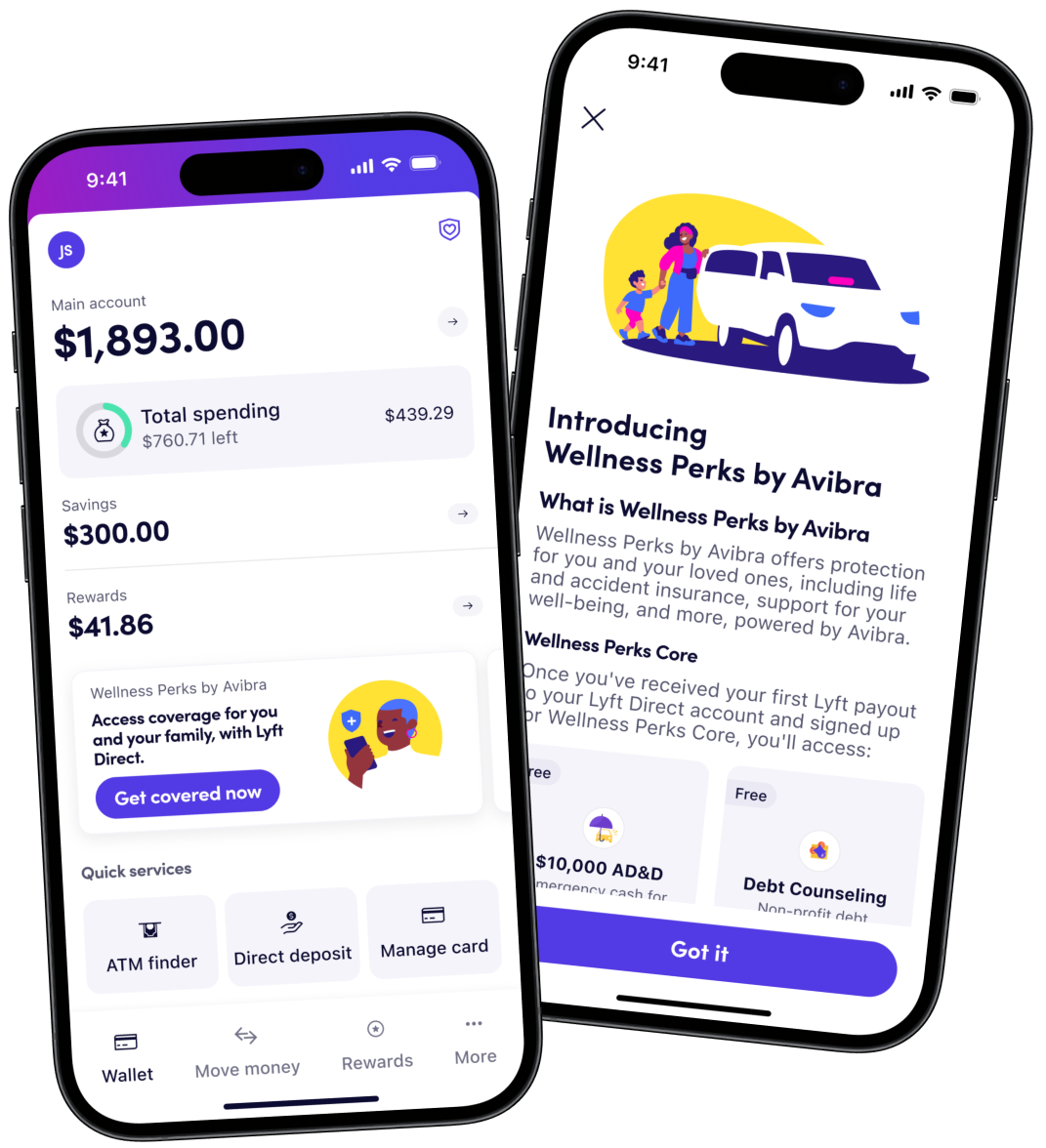
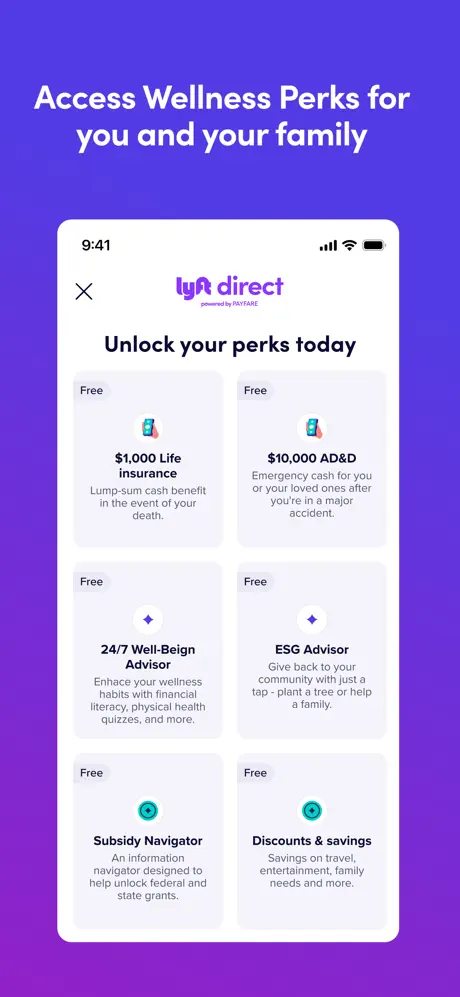
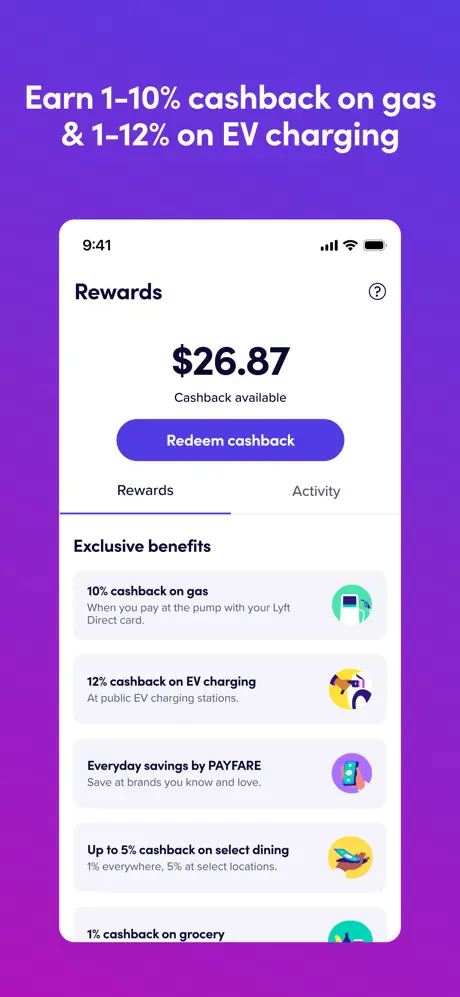
Lyft Direct is a Payfare app designed for Lyft workers. To improve Lyft Direct’s user satisfaction, I worked on an “Wellness Perks” integration with Avibra to offer Lyft Direct users access to benefits such as life insurance, roadside assistance, and access to financial advisors.
Impact
Improved Perceived Value for Gig Workers
User feedback highlighted a sense of care and support among drivers without traditional health coverage. This translated into a noticeable uptick in App Store reviews mentioning “benefits,” “perks,” or “support.”
Boosted Card Activity & Retention
Anecdotal evidence from user reviews and internal metrics suggested a correlation between perk awareness and Lyft Direct card usage. This supports Payfare’s goal of long-term user retention and increasing interchange fee revenue.
Context
What is Lyft Direct?
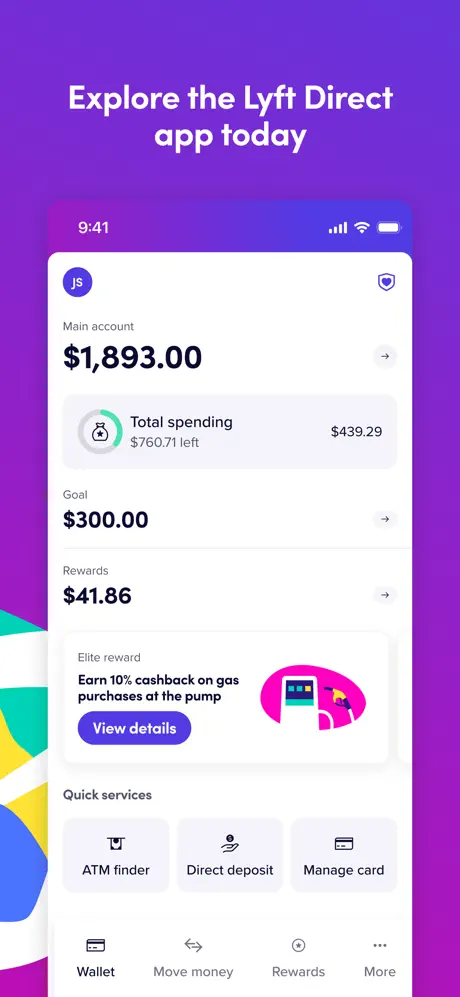
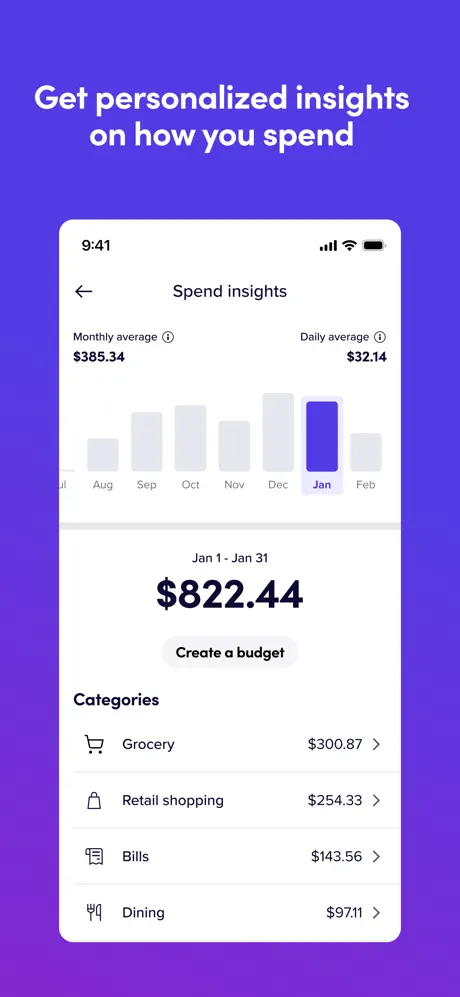
Lyft Direct helps Lyft drivers access earnings instantly and manage finances and offers a debit card, rewards, and perks. Revenue is primarily driven by interchange fees from card usage.
Why Add Wellness Perks?
Most gig workers don’t receive traditional health or financial benefits. To support drivers and increase card usage, Lyft partnered with Avibra to offer no-cost and low-cost wellness perks.
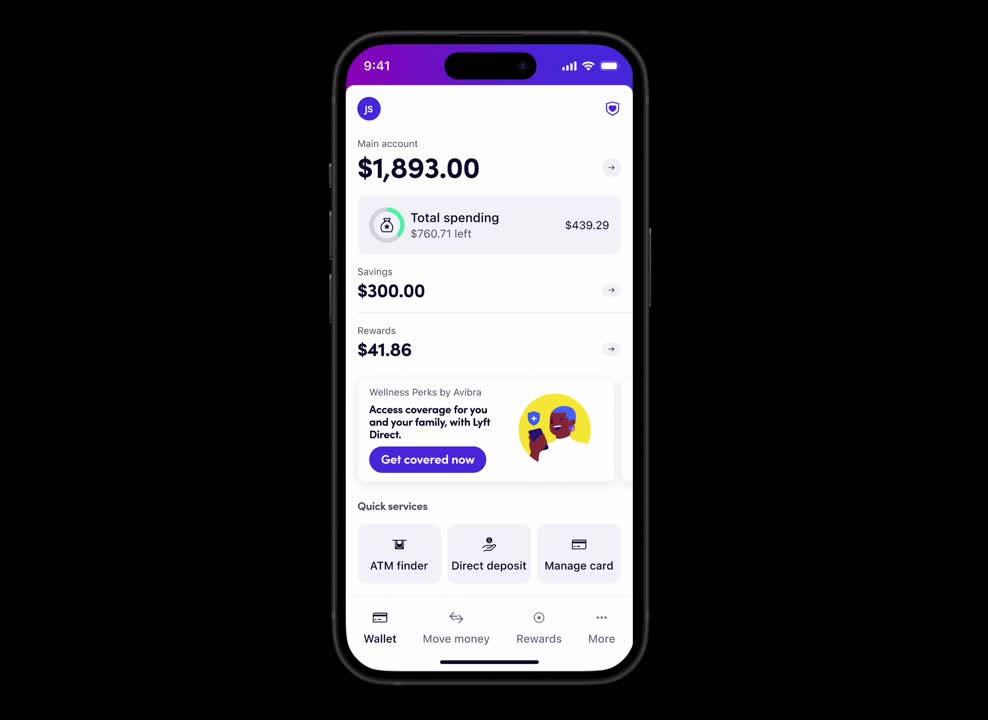
Lyft Direct feature display
Discovery
The Challenge
How might we improve user satisfaction to retain users and encourage Lyft Direct card usage?
Contextualizing User Needs
With limited time and resources, I reviewed app store feedback and considered gig workers’ experiences. While salaried U.S. workers often receive health benefits, gig workers typically do not, making perks beyond payment a valued and unmet need.
Client Direction
Lyft, as Payfare’s client, initiated the Avibra partnership. The integration needed to feel native, useful, and seamless without duplicating what Avibra already built.
App Store Reviews
User reviews showed a positive sentiment towards accessing their earnings and the additional benefits associate with the Lyft Direct rewards.
Gig Economy Worker Vulnerabilities
Lyft Drivers and other gig economy workers do not have access to health and financial benefits that they would in a salary role.
Planning and Ideation
Define the Problem & Goals
I aligned with cross-functional teams from Payfare, Lyft, and Avibra around a clear goal: increase user satisfaction by integrating a perks program tailored to drivers' real-world needs.
Scope the Work
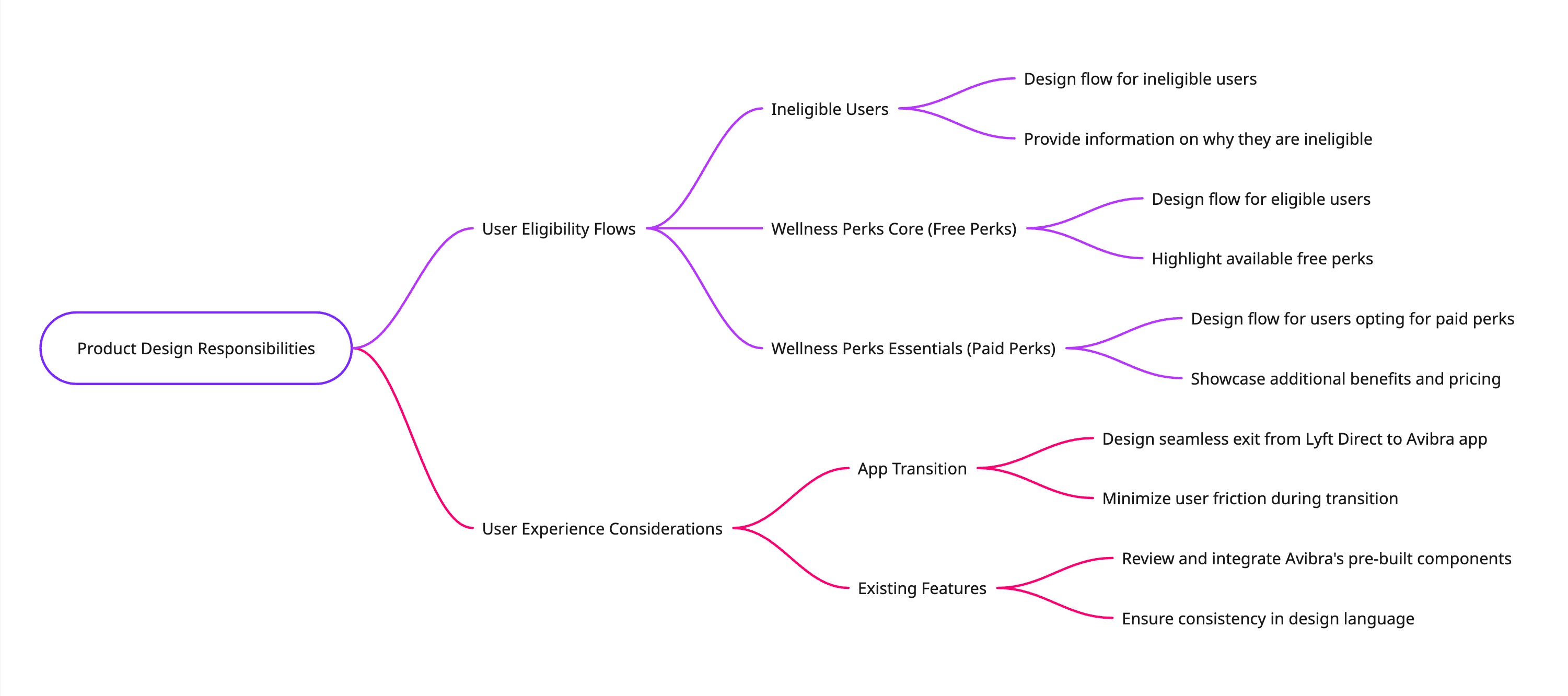
I collaborated with PMs to clarify what Avibra already built and defined what required custom design. I outlined key user stories and agreed on responsibilities.
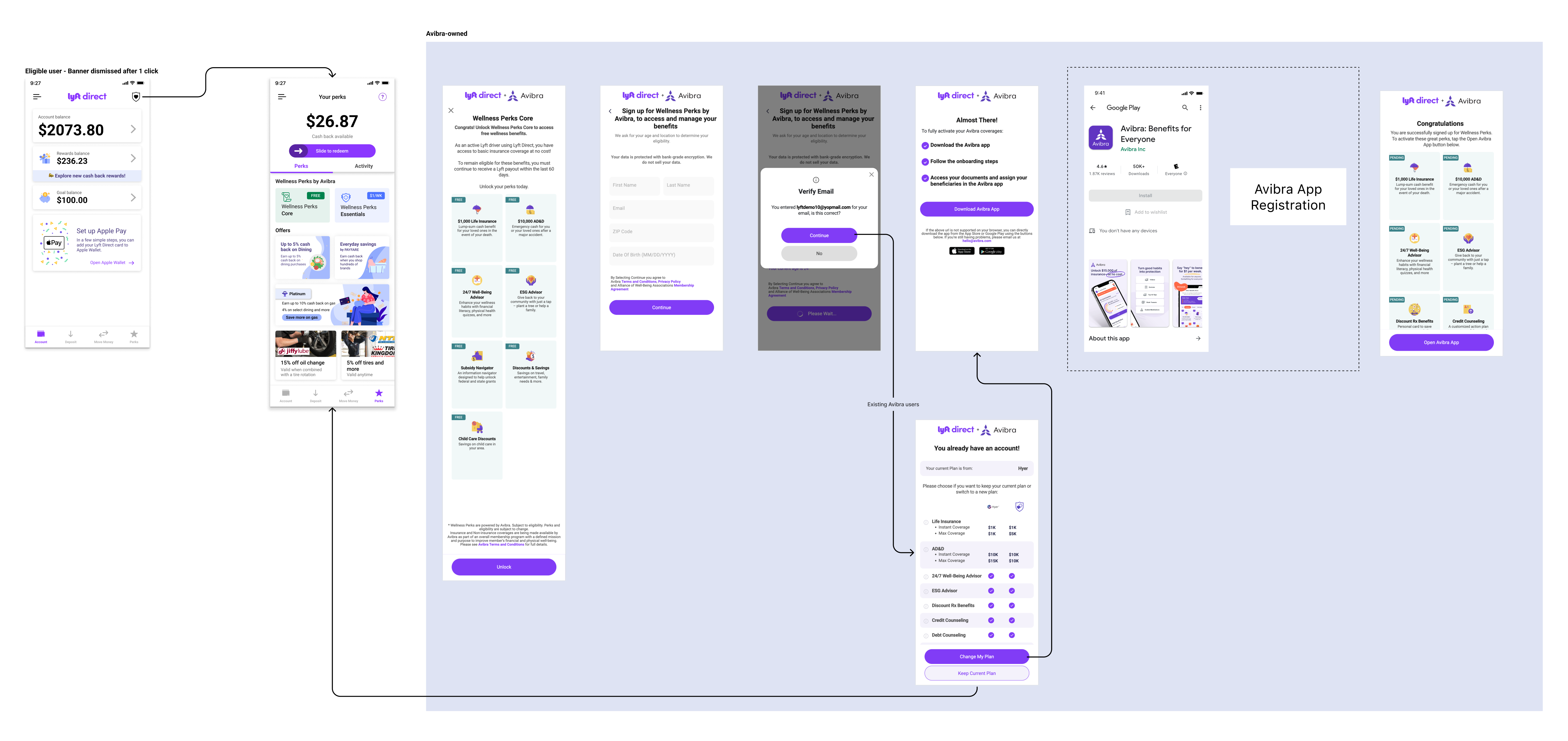
Ownership Mapping for Seamless Delivery
To ensure a smooth build, I mapped out what Avibra had already developed and how our team would build around it. I organized files by ownership and hosted async check-ins to keep developers unblocked and aligned. The image on the right is a sample.
Exploration
Exploring Placement & Discoverability
I explored various entry points for the perks including onboarding, modals, and banners. My aim was to balance visibility without disruption.
Visual Differentiation of Perks
A key challenge was making it clear which perks were free (Core) vs. paid (Essentials). I explored visual systems using iconography, color, and labels.
Handling Ineligible Users
For users not currently driving with Lyft, I tested different ways to communicate ineligibility including disabled CTAs, tooltips, and help content.
Design
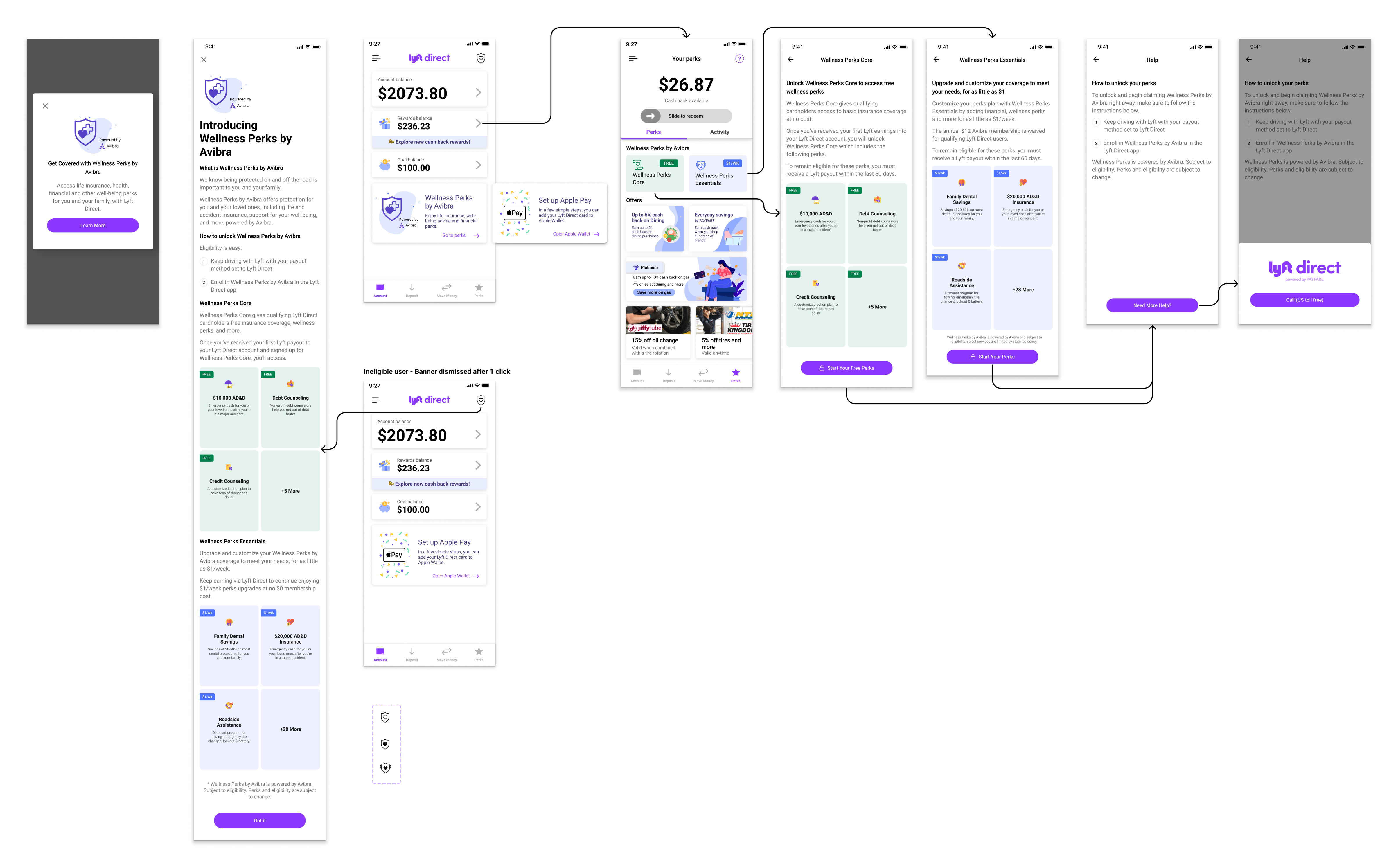
With the foundation, user flows, and context, I designed the first iteration of the Avibra integration into the Lyft Direct app.
Ineligible Users
Discoverability
I included a pop-up modal, info banner, and designed a new on the “Your perks” page to encourage users to discover Avibra Wellness Perks.
Wellness Perks Avibra Branding
It was a challenge to differentiate between Wellness Perks Core and Wellness Perks Essentials. I used colours to indicate the difference between the two products and added a banner to show which product was free and which one the user had to pay for.
Troubleshooting
If a user wasn’t driving Lyft, then they weren’t eligible for Wellness Perks. To communicate this, I added a lock icon on the CTA of the Wellness Perks checkout and included the Help instructions.
Eligible Users
Communicating User Eligibility
The top right icon on the dashboard was designed to show whether the user is not enrolled with Wellness Perks, enrolled with Wellness Perks Core, or enrolled with Wellness Perks essentials.
Design with the Development Team in Mind
Part of the initial challenge of this project was determining what the Avibra team was building, and what I needed to design. I was given several assets and flows which I organized in Figma to clearly communicate who was responsible for which part of the design. This approach not only streamlined collaboration but also ensured that the handoff process was seamless, minimizing potential roadblocks during implementation.
Design with the Product Team in Mind
To align with the business goals of integrating Avibra into Lyft Direct while balancing user needs, I focused on making the feature easily discoverable within the rewards section of the app. I designed clear and intuitive entry points to promote the integration throughout the app, ensuring users could engage with the offering seamlessly. These efforts supported Payfare’s and Avibra’s roadmap by driving visibility and engagement while meeting Lyft Direct’s objectives.
Final Design
Shortly after Avibra Wellness Perks was implemented into Lyft Direct, we completed a UI refresh on the app. While I was not directly responsible for this section of the UI refresh, I did refresh and contribute to the design system in other sections of the app.
Lorem Ipsum
Learnings
Design the Meeting
With multiple stakeholders, I treated meetings like mini-design sessions — always arriving with an agenda and leaving with alignment.
Collaborate Early, Avoid Rework
Involving dev and PMs from day one helped reduce iteration cycles and fostered ownership across teams.
Build Rapport to Unblock Work
I invested time in building trust with Avibra’s devs, which paid off when blockers arose. Open communication kept the project moving.